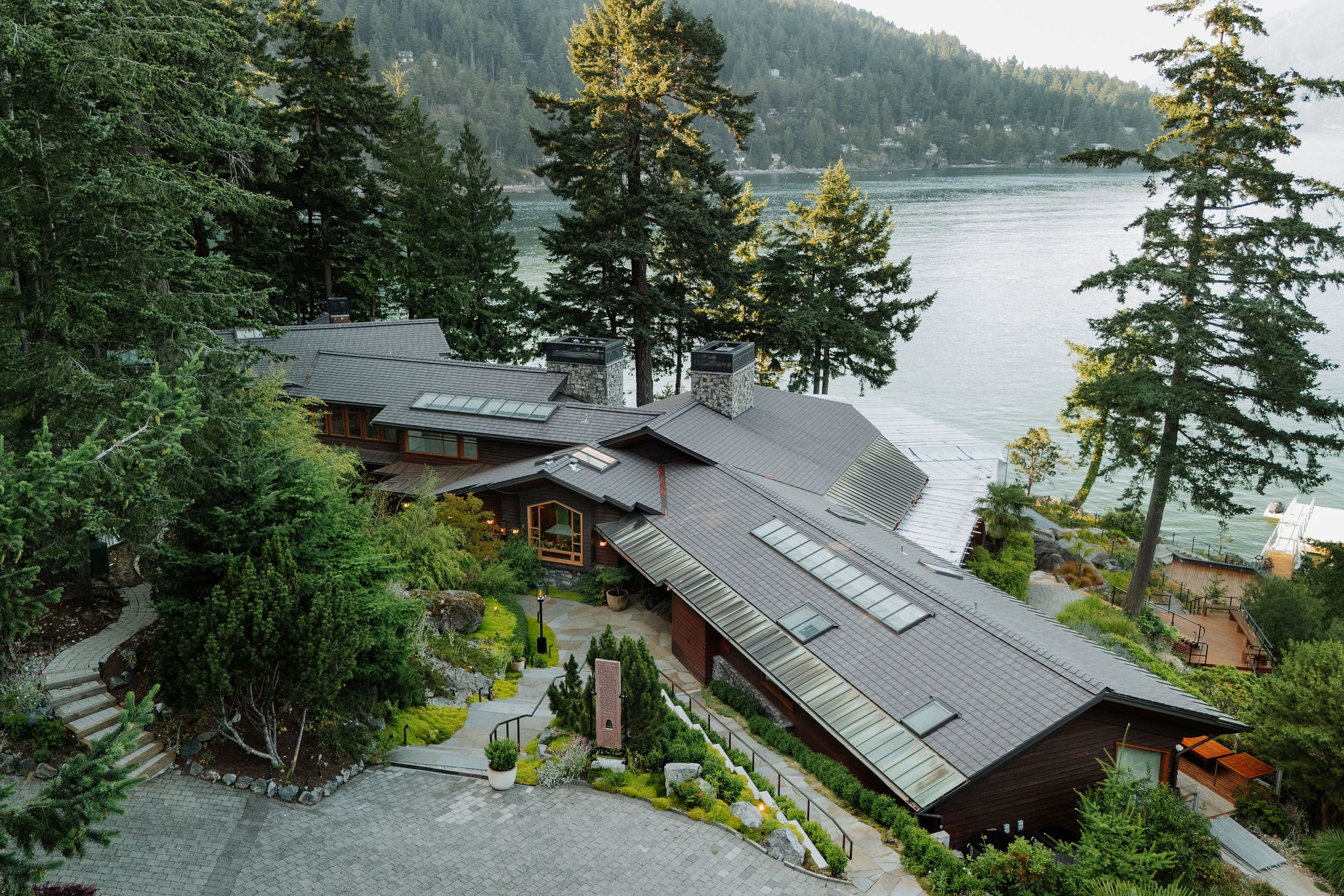
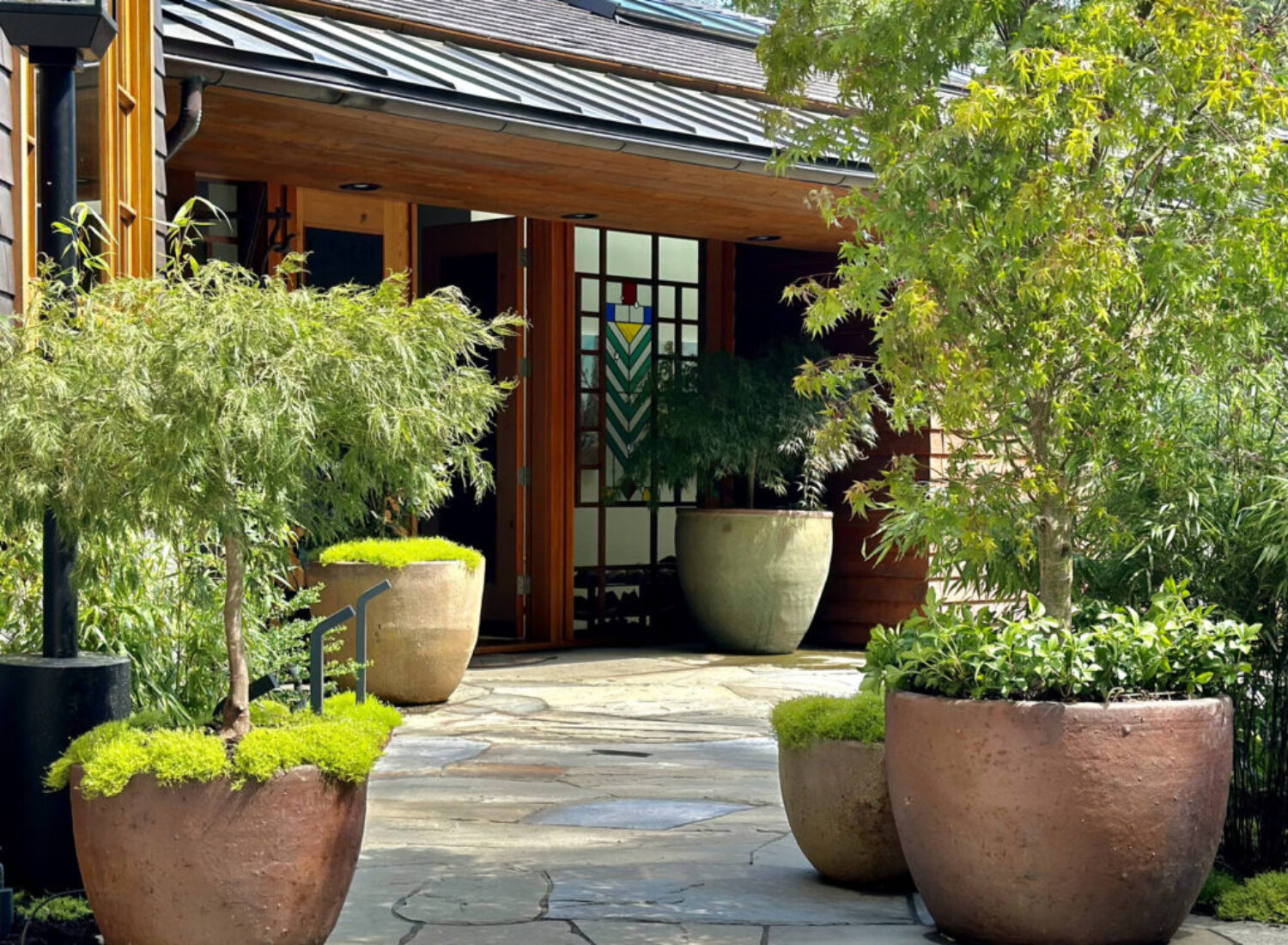
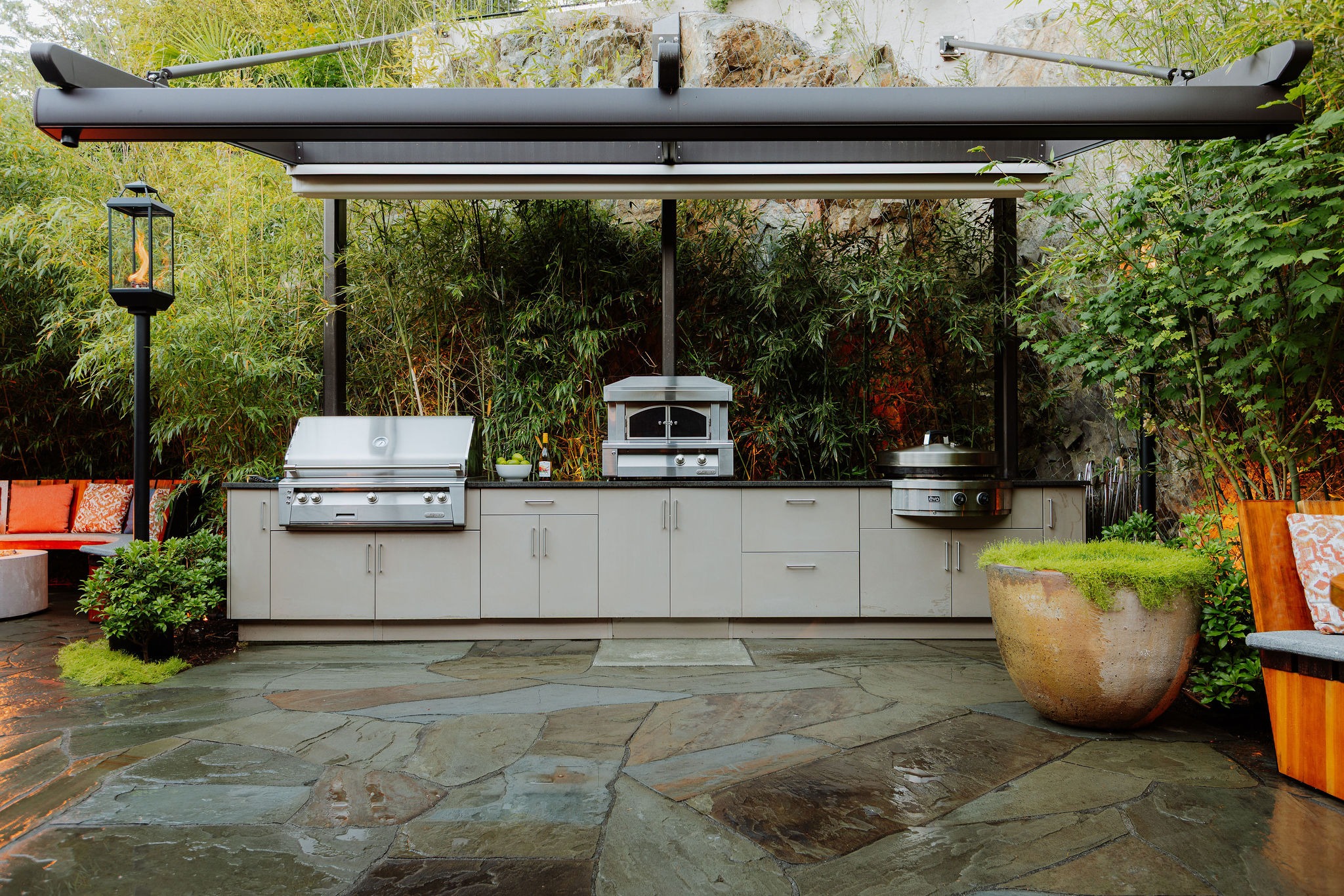
Set quietly into its forested West Coast site, this project reads less as a designed object and more as a natural occurrence, something uncovered rather than imposed. Rooted in the language of quintessential West Coast mid-century modernism, the landscape and architecture work in tandem, drawing directly from native materials and the rhythms of the surrounding environment. Stone, moss, timber, and filtered light become the primary building blocks, creating a composition that feels inevitable, as if it has always belonged.
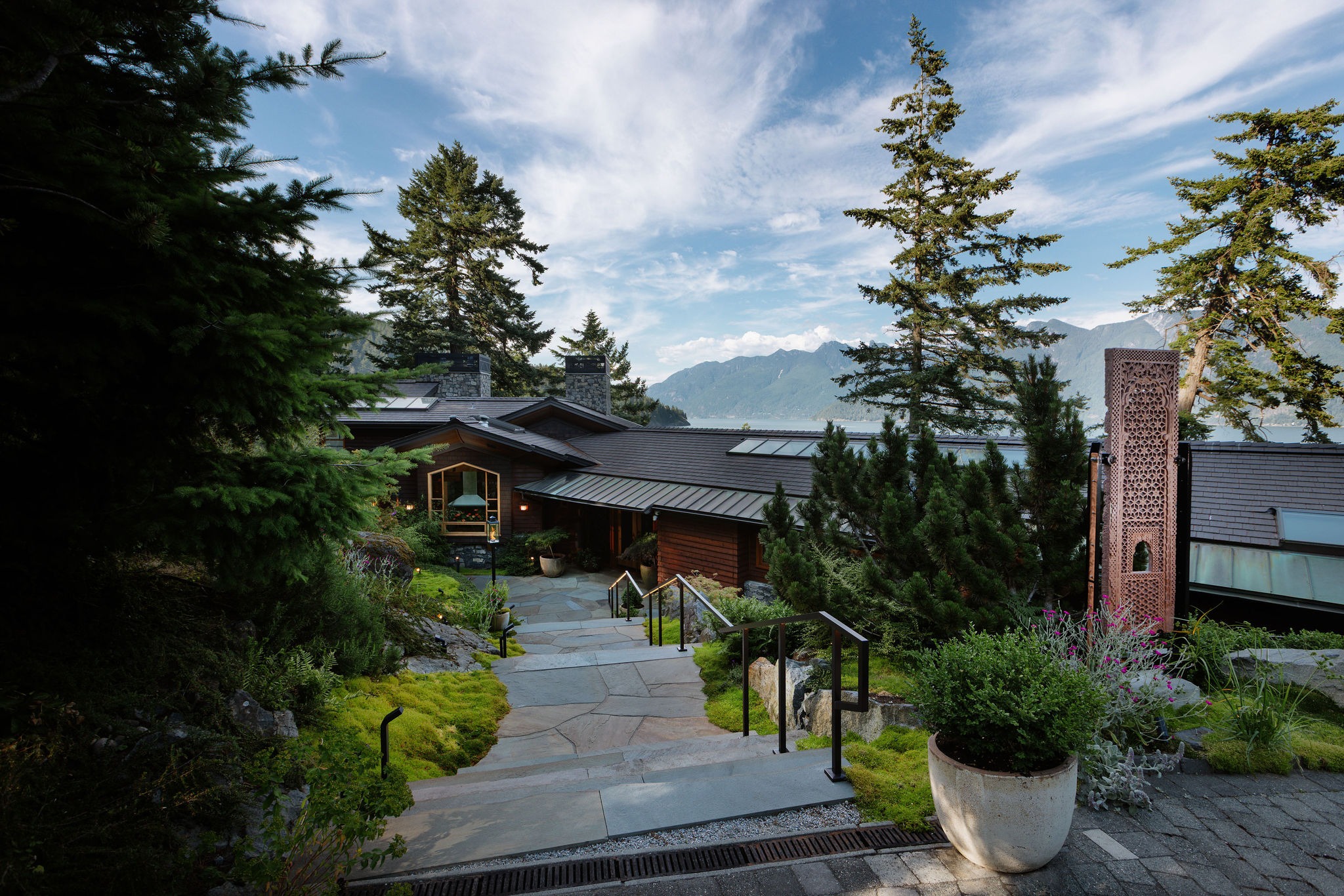
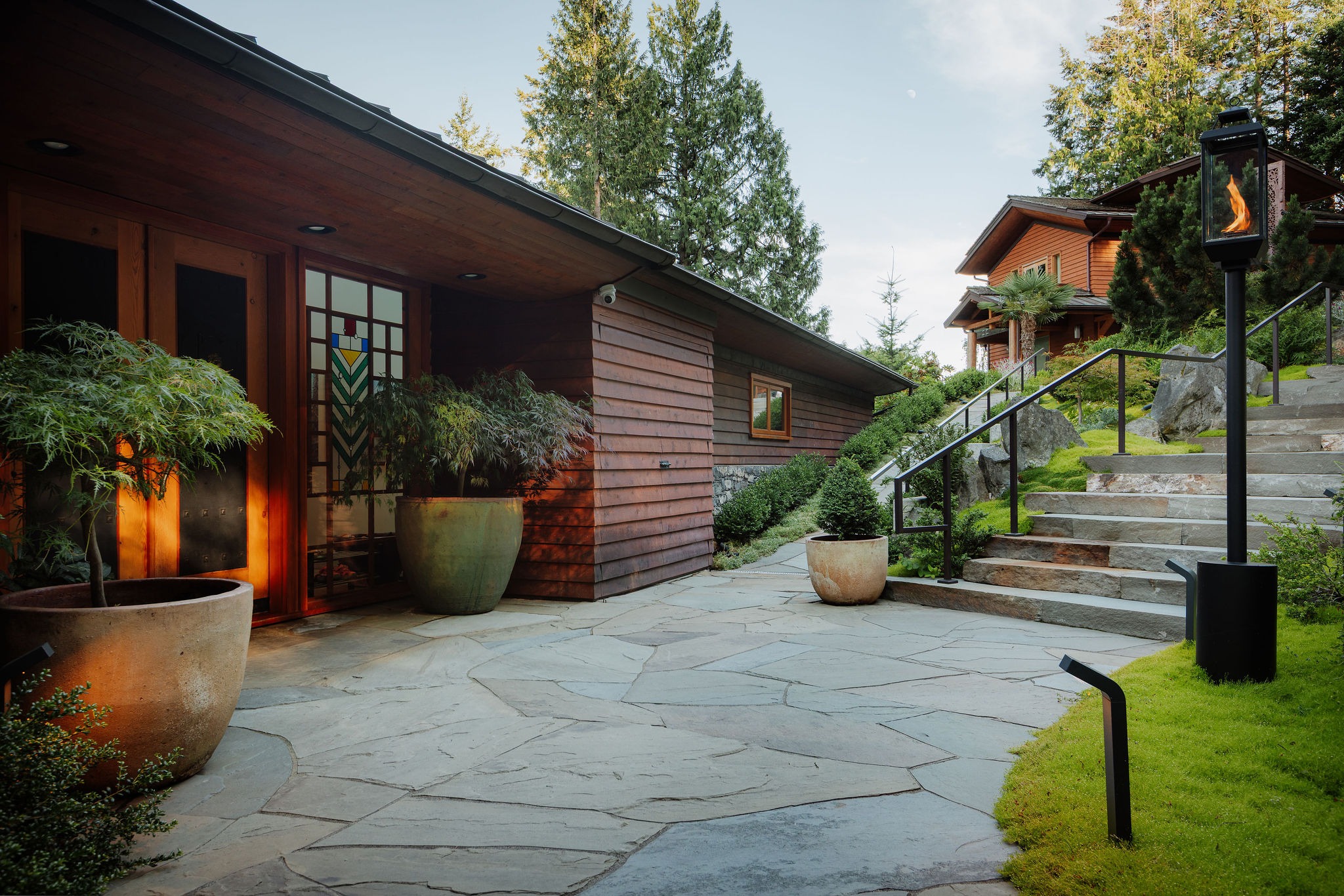
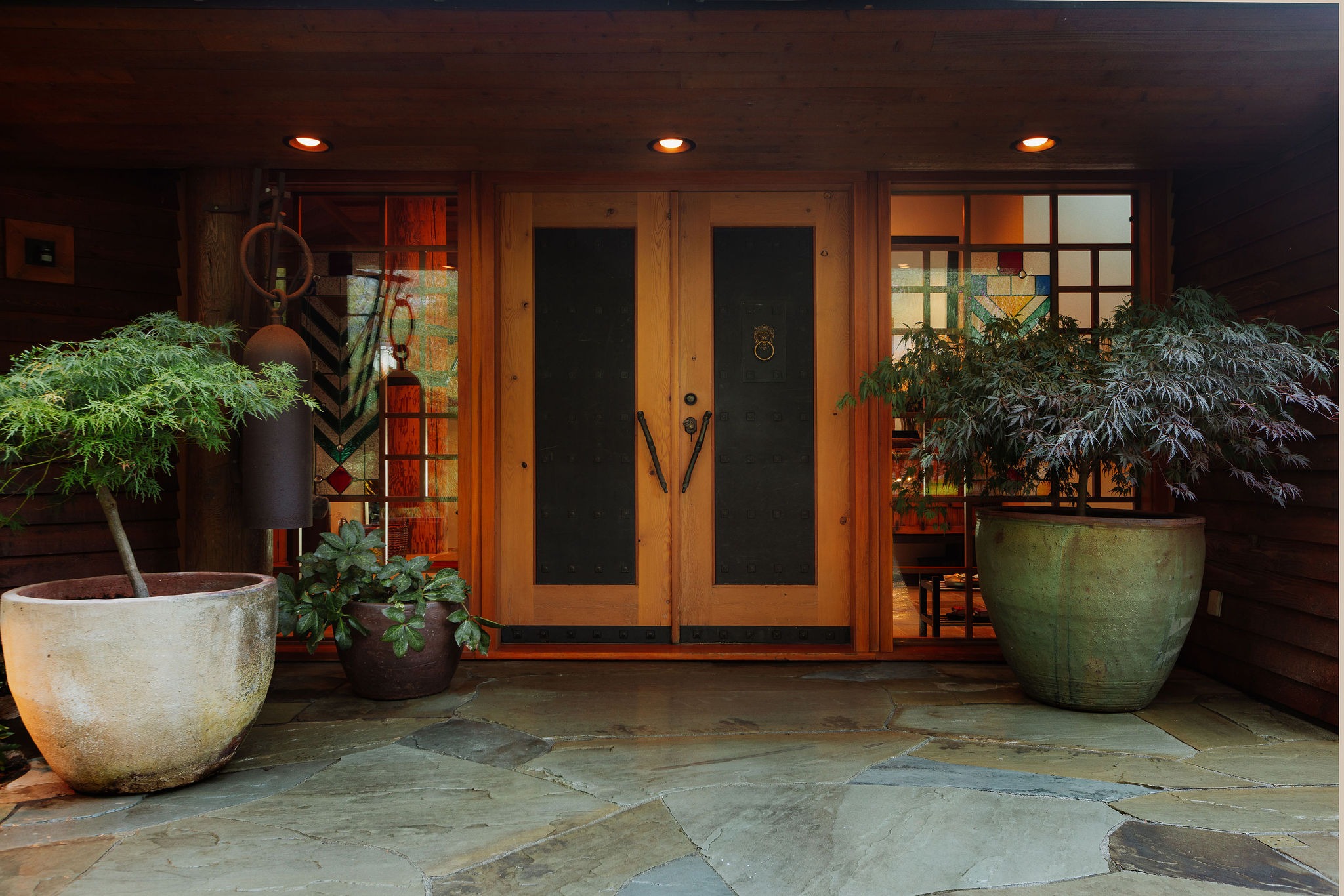
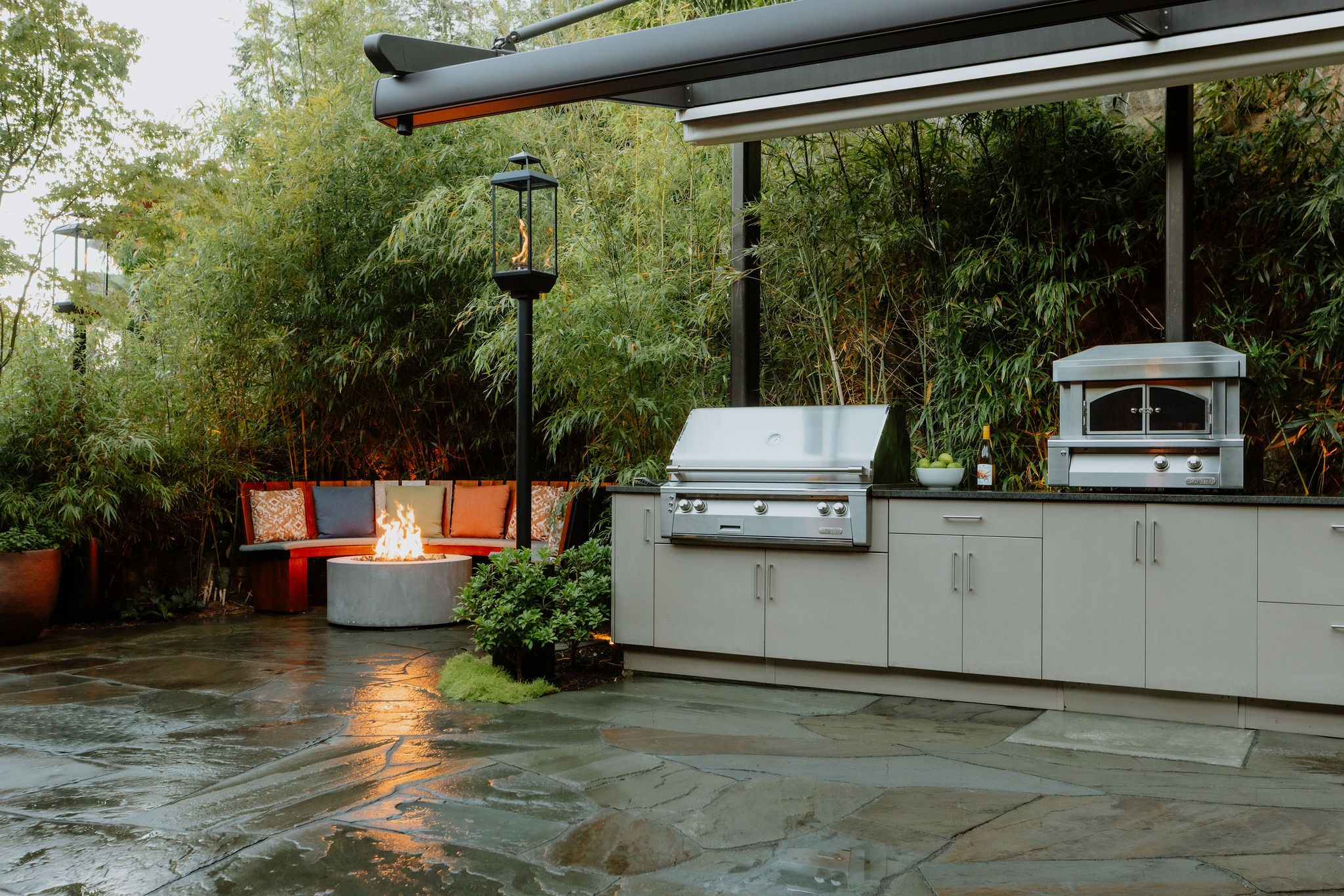
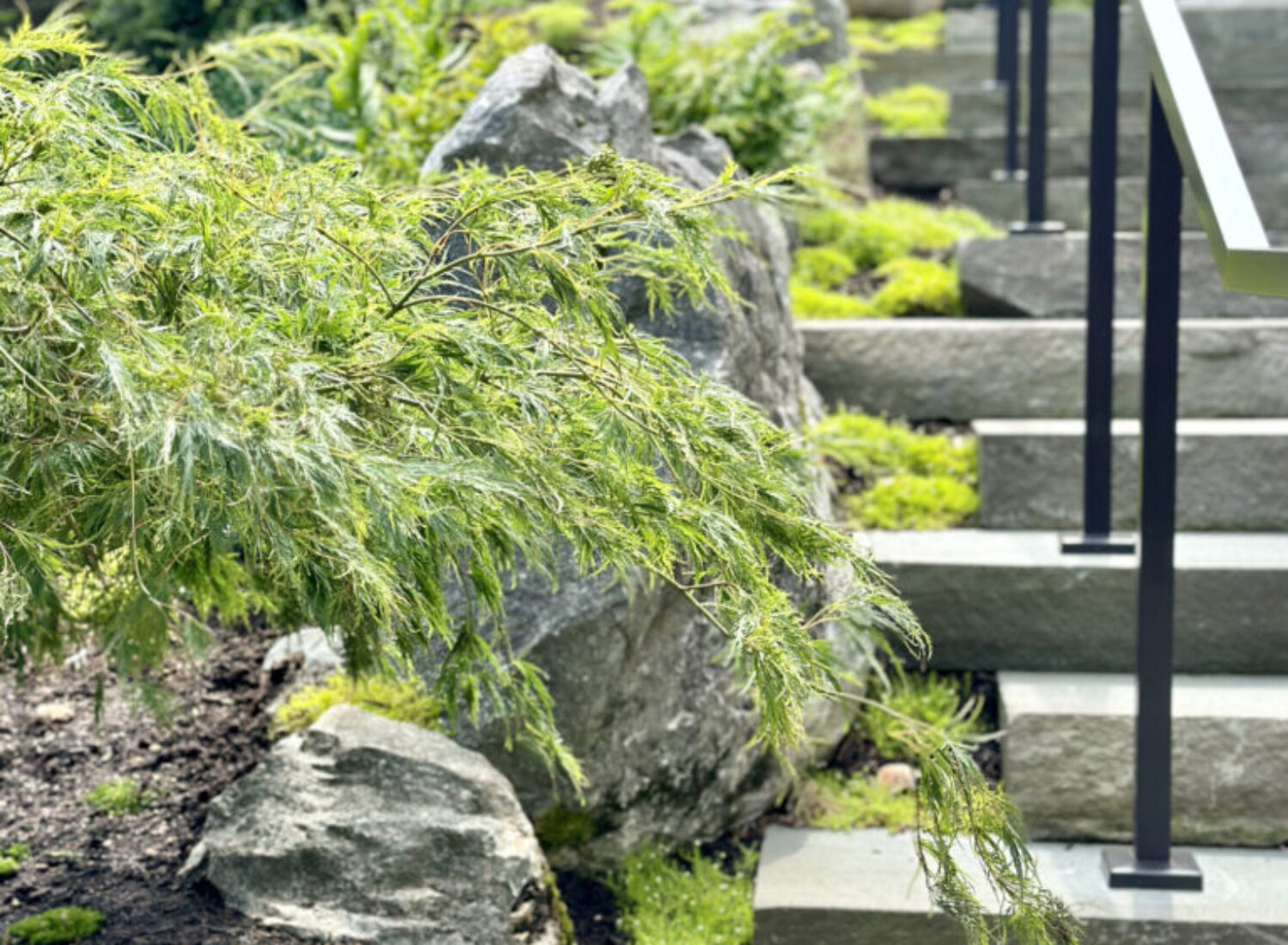
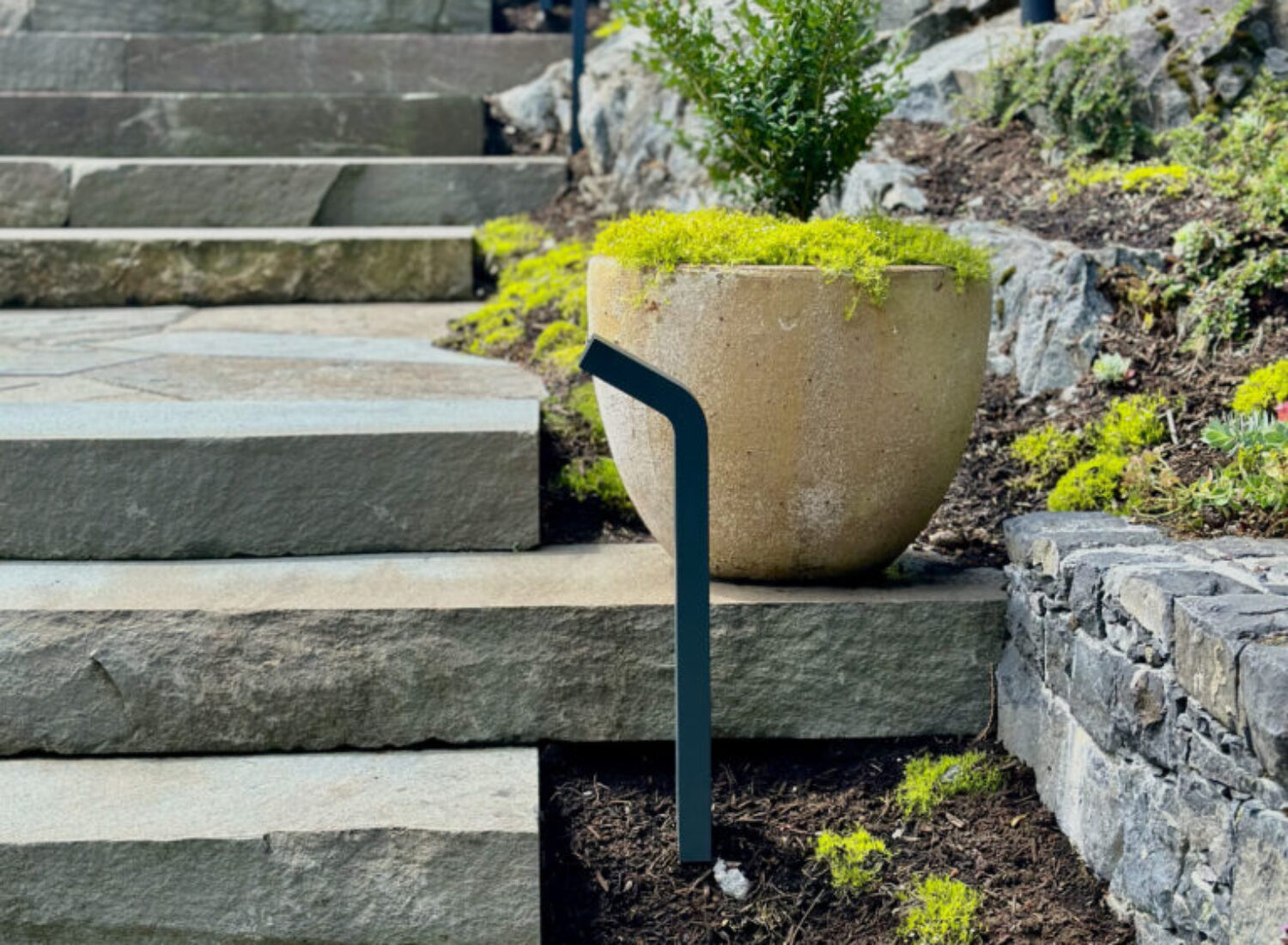
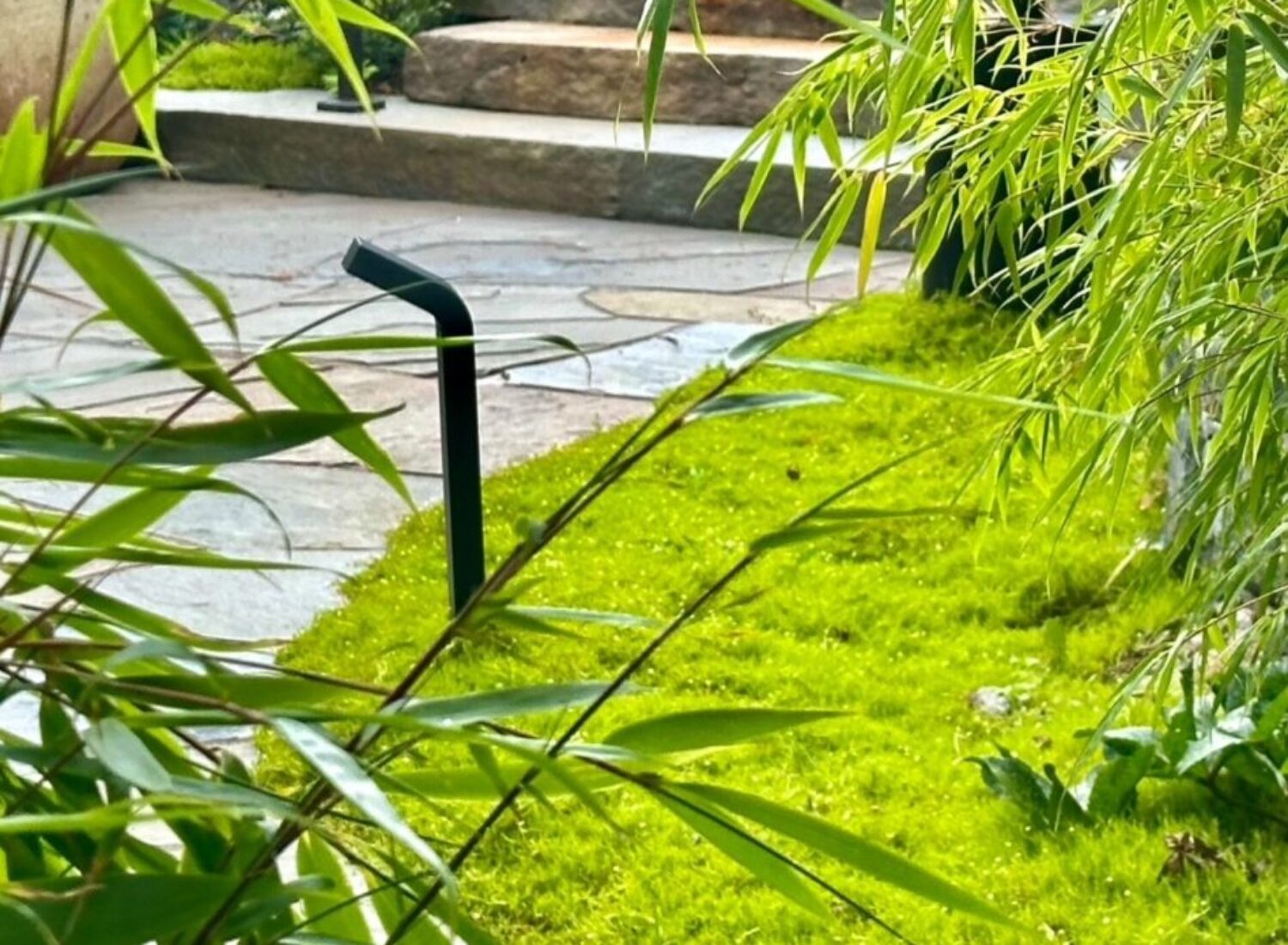
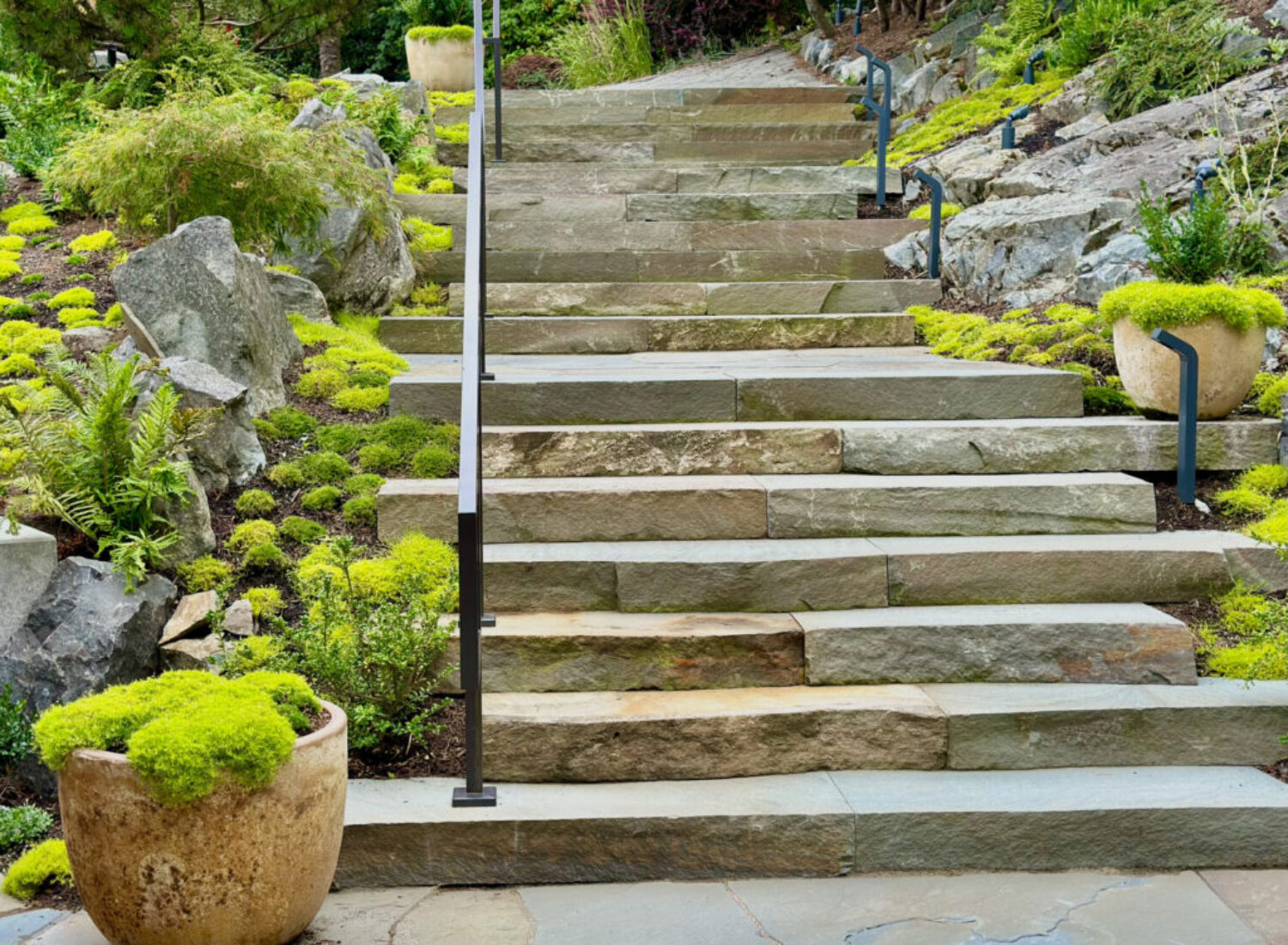
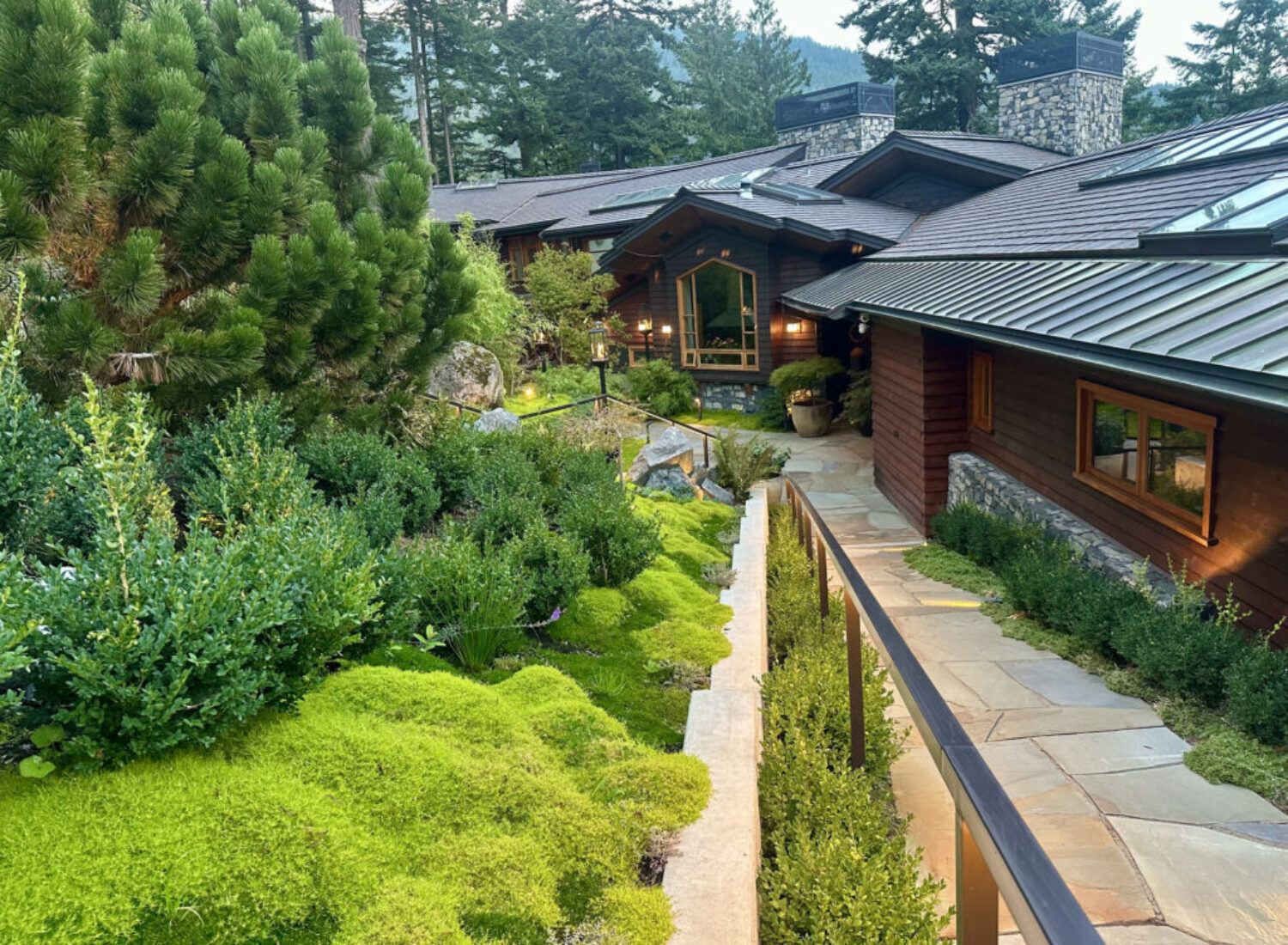
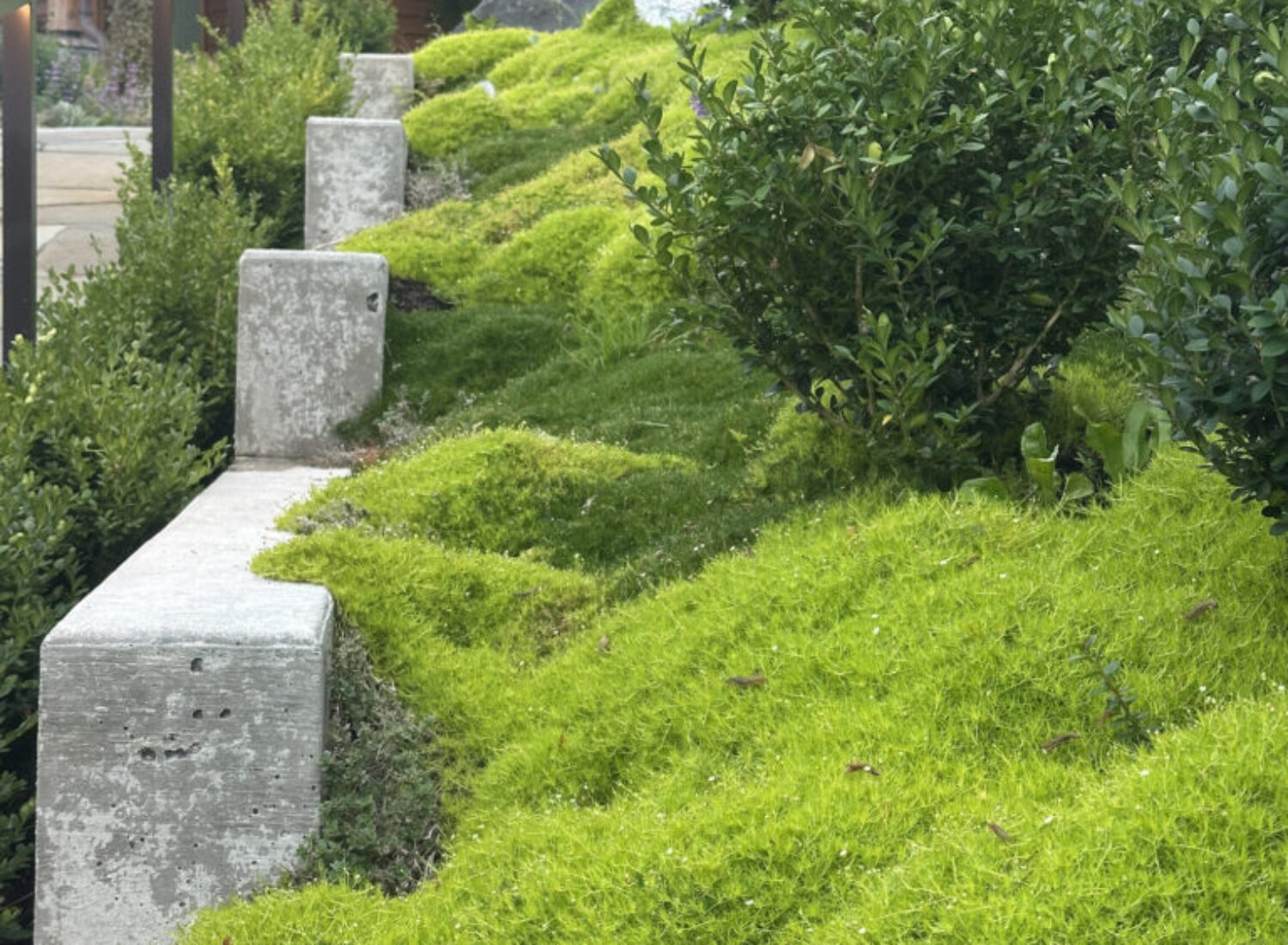
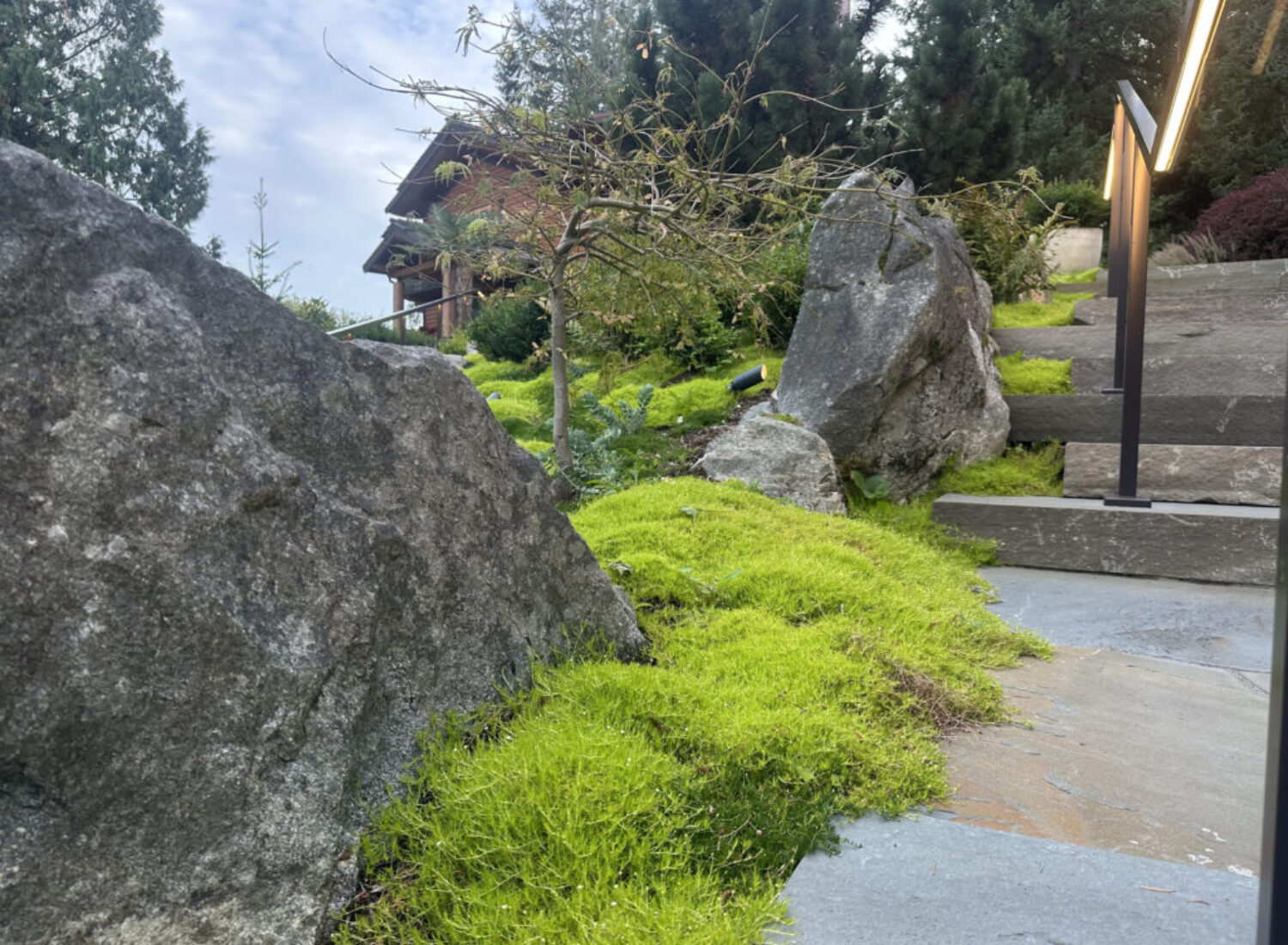
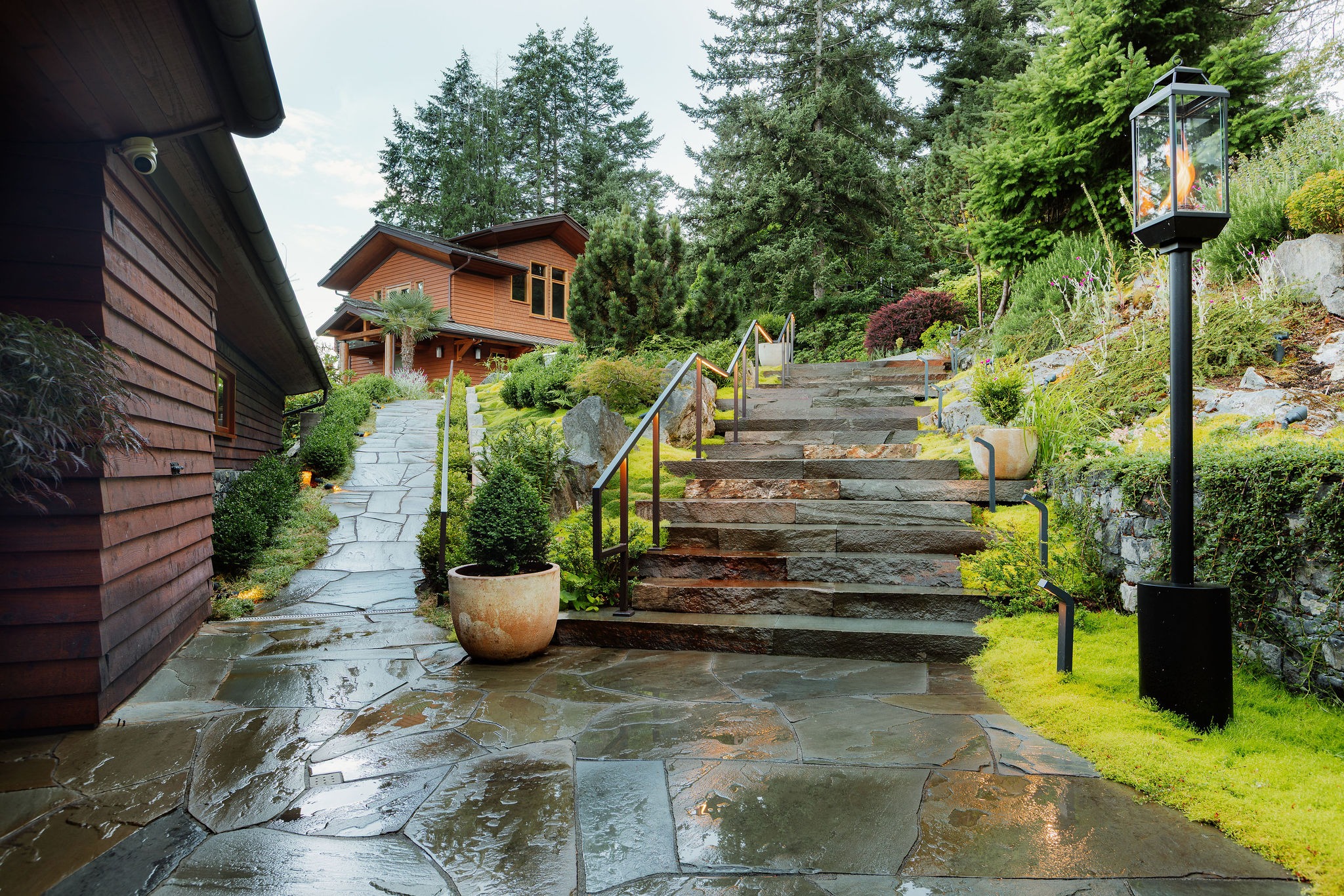
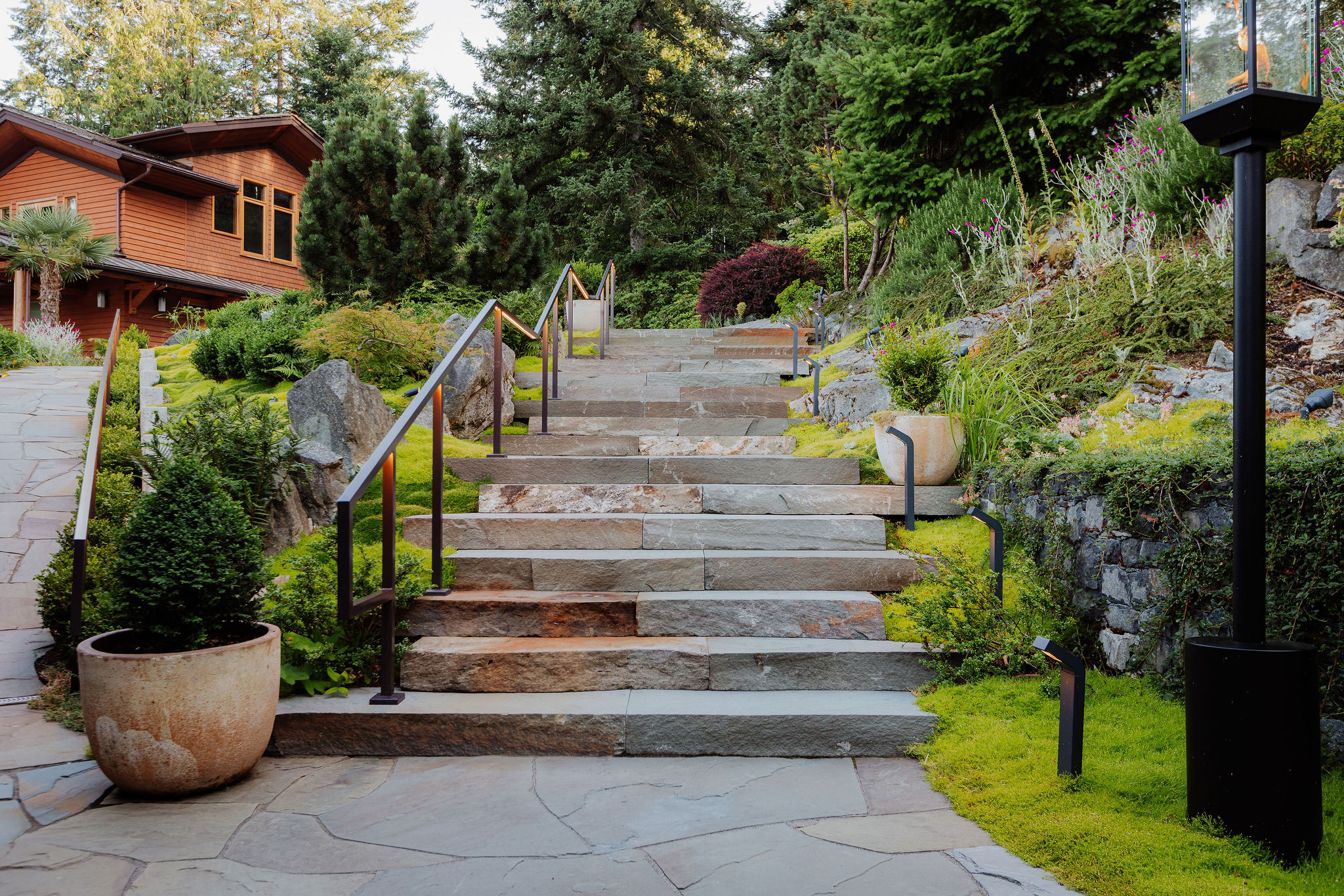
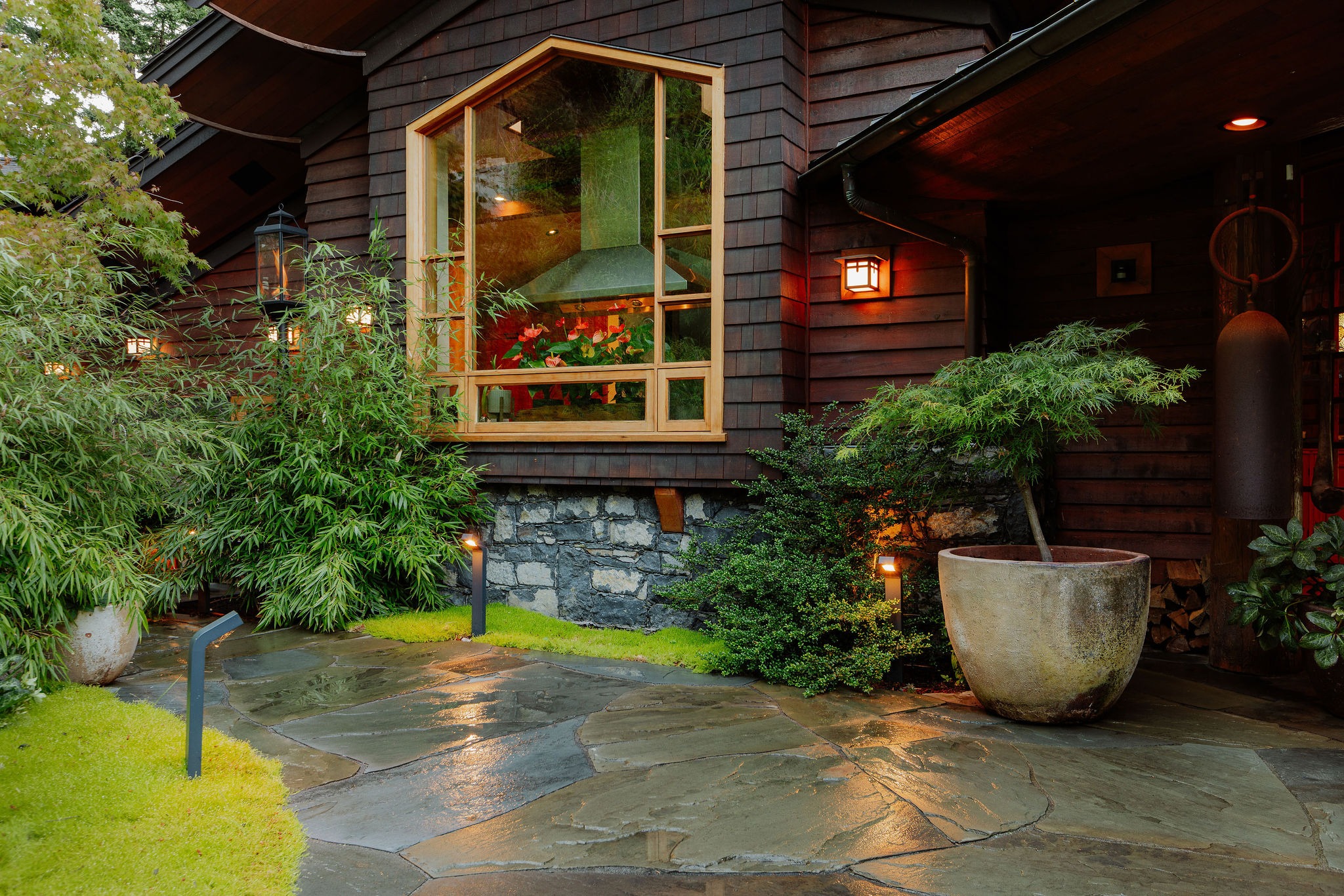
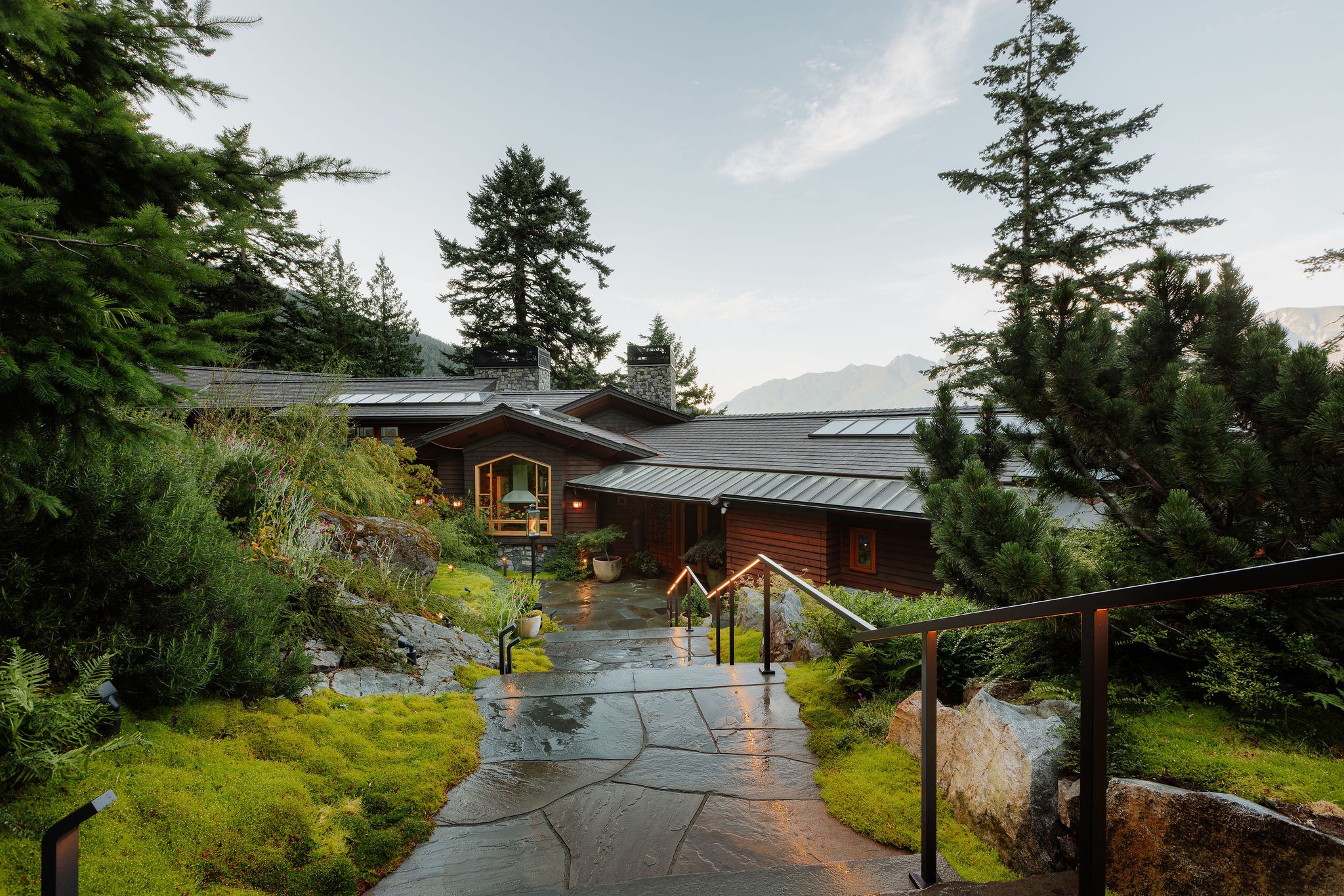
Solid bedrock anchors the project physically and emotionally, inspiring the design response for the broad stone steps and large stone flagstones that carpet the ground planes, all while the hardscape is gently softened by moss that spills organically into joints and edges. This deliberate integration blurs the boundary between hardscape and landscape, allowing pathways to feel carved rather than constructed. Moss becomes a living carpet, reinforcing the sense of calm that defines the West Coast modern ethos. No barriers, just natural elements flowing seamlessly, echoed and embraced by the constant flow of eagles, deer and squirrels.
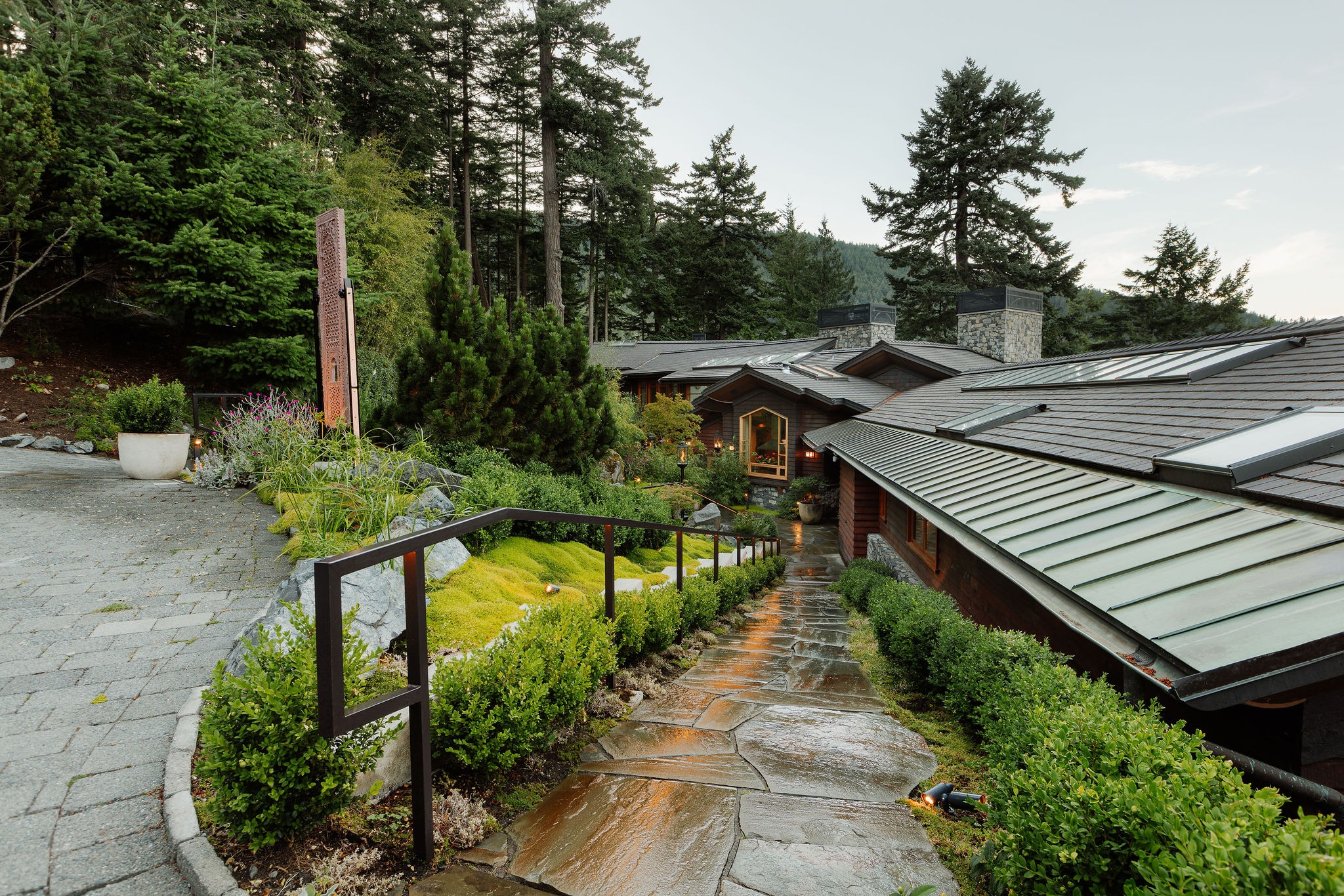
At every turn, the design emphasizes movement through space rather than arrival at a single moment. Pathways unfold gradually, framed by bamboo, native evergreens, vine maples, ferns, and copious amounts of moss. The experience is sequential- views are revealed slowly, encouraging moments of pause. Low-profile lighting is integrated seamlessly into railings and ground planes, casting a warm, understated glow that enhances textures without competing with them.
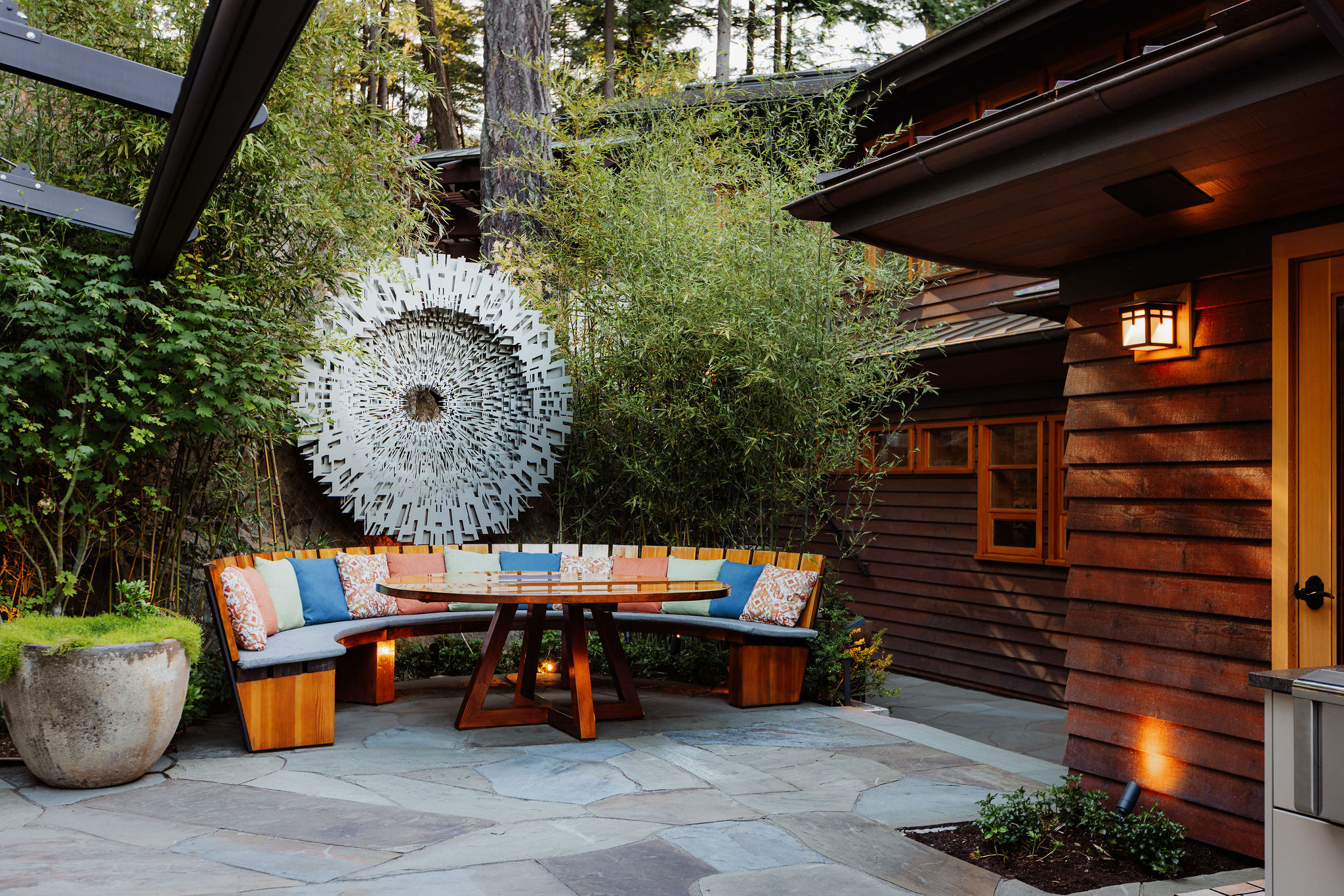
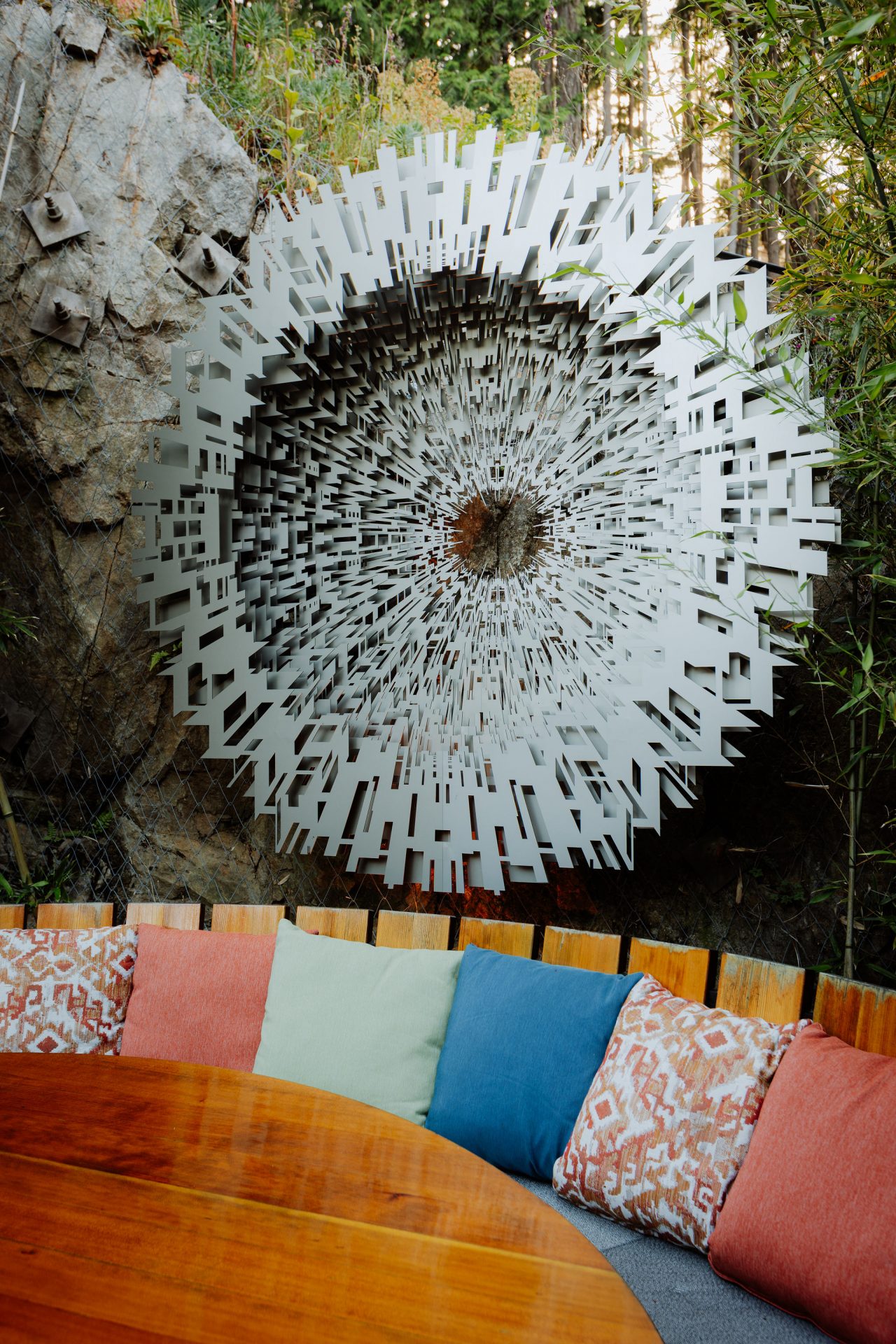
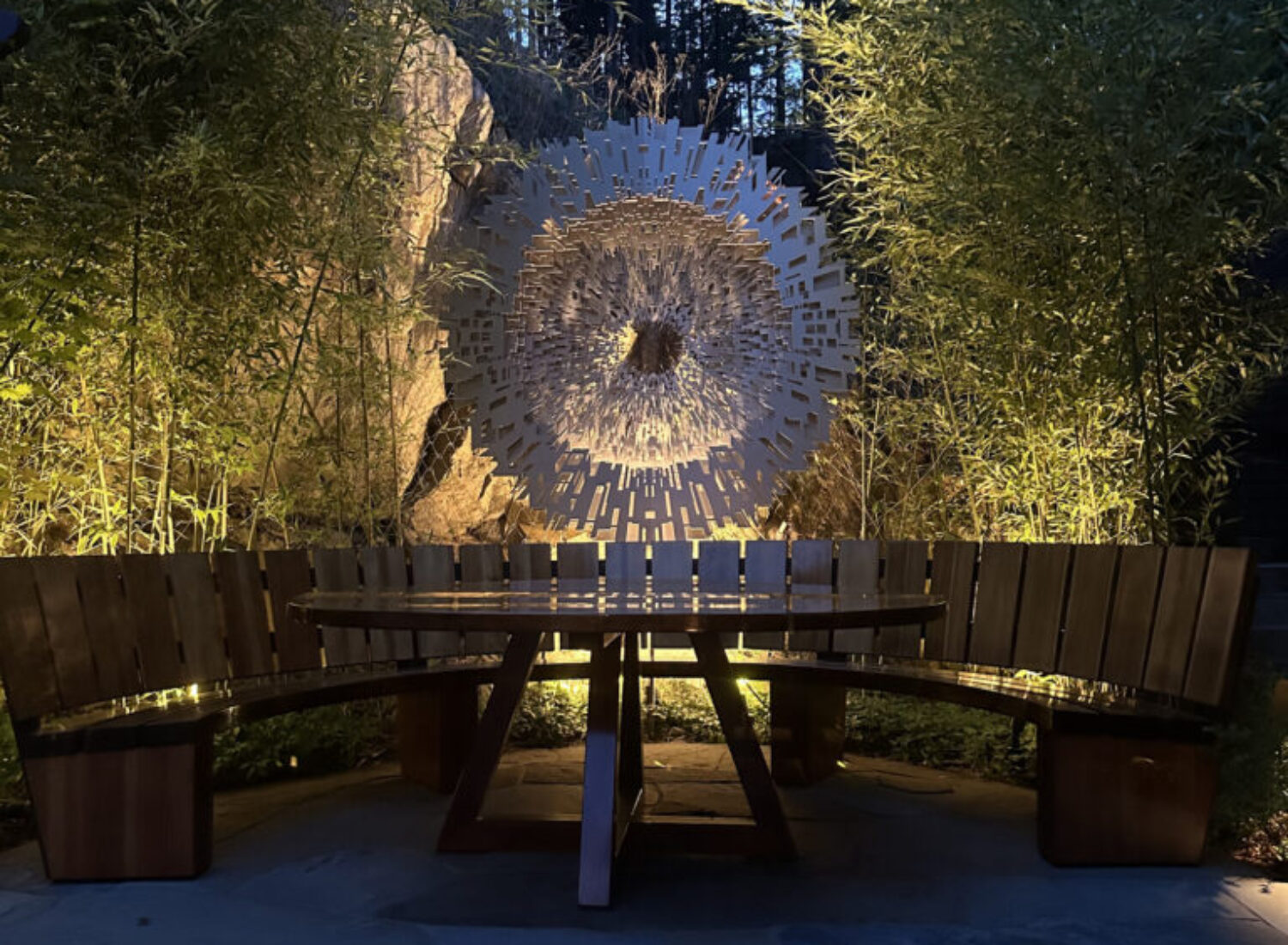
At the heart of the project sits the sculpture, designed site specifically by artist David Spriggs, which is the undeniable epicentre around which everything else orbits. Positioned as both destination and reference point, it operates as a connective element, visually and conceptually tying the landscape together. The radial form echoes outward, influencing circulation, sightlines, and spatial balance. From multiple vantage points, the sculpture appears partially concealed, then fully revealed, reinforcing its role as a quiet anchor rather than a dominant monument.
This central artwork does more than occupy space; it organizes it. Benches, pathways, and planted zones orient themselves in subtle response, creating a sense of cohesion that feels instinctive rather than forced. The sculpture becomes a moment of contemplation—an abstract complement to the organic softness of moss and foliage— it belongs fully to its surroundings, framed by bamboo and stone, it floats on the bedrock as though it emerged from it.
Architecturally, the residence, originally designed by Sharpe Thompson, Berwick and Pratt, with additions later designed by architect Michael Lightbody, embody the ethos of mid-century modern principles. Everything about the site, the architecture and landscape design inhabits a quintessential west coast inspired vibe. Clean mid-century lines are softened by natural materials and deep overhangs, allowing the structure to sit lightly within the landscape. Timber cladding weathers gracefully, while large openings dissolve the boundary between inside and out. The landscape does not compete with the architecture; it participates in and with it.
Ultimately, the guiding design principle for the project lies in restraint. Nothing feels over-designed or overly precious. Every material choice, every alignment, every transition is guided by site specific inspiration that embodies West Coast mid-century modernism —quiet, grounded, and deeply connected to place. The primary goal was to design a landscape that reflected the Genius loci, Latin for “spirit of the place,” the protective, guardian spirit of a specific location. In celebration of that spirit the sculpture is aptly named “AKER” or “Guardian of Entrances”. The result is a landscape that doesn’t just occupy its site but grows from it and breathes with it.
*Project Overview and Narrative provided by Thomas Kyle, TKL Design Inc.
* Some photos courtesy of TKL Design Inc and used with permission
Estate Manager: Natasha Manchester